
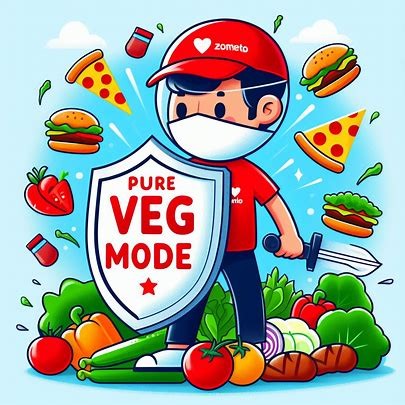
Zomato’s ‘Pure Veg Mode’ was more than a service; it was a statement to address the dietary habits of a significant vegetarian demographic in India.
At face value, the company’s intent was clear: to provide a dedicated service that ensures the sanctity of vegetarian orders, recognizing the cultural importance of dietary preferences. With the segment of “pure-veg” customers on its platform – perhaps the top leadership thought that this would attract more clientele and perhaps would have also sourced this with on-the-ground surveys, customer connect, and taking heed of media posts, etc.
However, the initiative quickly became a hot topic on social media, sparking a widespread debate. The backlash was not just a knee-jerk reaction but a reflection of deeper societal concerns.
The proposed green uniforms for the ‘Pure Veg Fleet’ were perceived negatively as a marker of division, reminiscent of historical biases and potential discrimination. At first thought, it seemingly could have eluded the leadership team of such consequences but now stands out as a case study for marketing professionals to be more aware of such fallouts.
The uproar on platforms like Twitter and Facebook was significant enough that Zomato had to reconsider its approach, leading to the retraction of the on-ground differentiation. This emphasizes the fact that top leadership before and during the rolling out of such innovative features restrain themselves from securing the ‘first off the block” syndrome and rather actively engage with their Corporate Communications team to lay out the ground effectively to avoid the bad after taste which the Zomoto team experienced.
This incident underscores the power of social media as a double-edged sword in shaping corporate decisions. It serves as a reminder that while innovation is crucial, it must be balanced with societal values and perceptions.
Corporates in the Indian food delivery industry must tread carefully, ensuring that their innovations are inclusive and yet sensitive to the diverse fabric of Indian society.
As a case study going forward, companies should consider the following:
- Engage in Active Listening: Use social media as a vibrant tool to gauge public sentiment and obtain real-time feedback.
- Conduct Thorough Research: Understand the cultural and social implications of any new service or feature.
- Foster Inclusivity: Ensure that innovations do not inadvertently create divisions or promote discrimination.
- Communicate Transparently: Clearly articulate the intent behind innovations and be open to dialogue with stakeholders.
Zomato’s journey with ‘Pure Veg Mode’ is a valuable lesson for the food delivery industry. It highlights the need for businesses to innovate responsibly, with a keen awareness of the social dynamics at play.
As an individual, I still fail to believe that this innovative venture faced the whiplash that it did and hastened top management’s decision to roll it back in real time.
By doing so, perhaps it could have been a decision to just avoid some palpable immediate pitfalls and pave the way for services that resonate positively with their audience at a later more opportune time.
Would eagerly await your views.
#fooddelivery # customerbehaviour # psychology # marketing # corporatecommunication # India